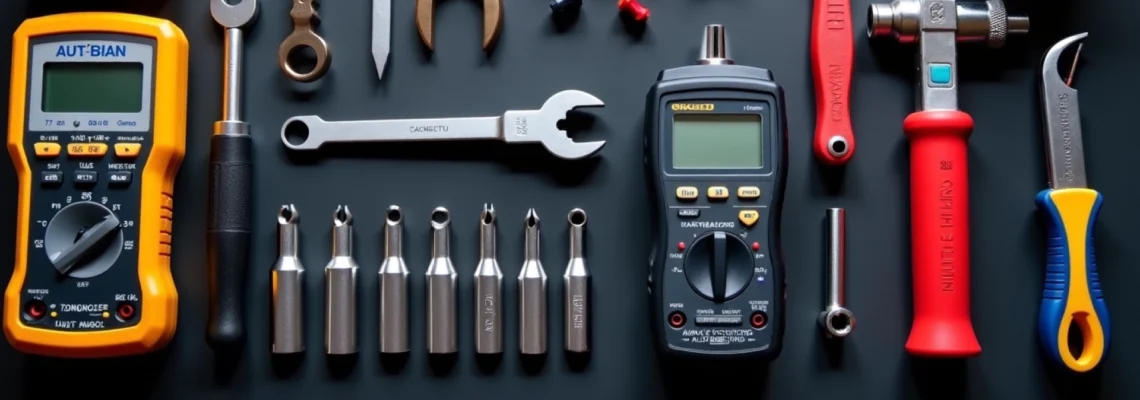
Modern vehicles have evolved into sophisticated machines that blend mechanical precision with cutting-edge electronics. Every car owner faces the inevitable reality of maintenance issues, from simple fluid checks to complex diagnostic procedures. Having the right tools at your disposal transforms these challenges from expensive garage visits into manageable home projects. The average car owner spends approximately £500-800 annually on routine maintenance and unexpected repairs, yet many of these tasks can be accomplished with a well-equipped home toolkit.
Building a comprehensive automotive toolkit requires understanding both traditional mechanical systems and modern electronic components. Today’s vehicles integrate computer-controlled systems that monitor everything from engine performance to tyre pressure, making diagnostic equipment as essential as traditional wrenches and spanners. Professional mechanics invest thousands of pounds in specialised equipment, but car owners can achieve remarkable results with carefully selected, budget-friendly alternatives.
Diagnostic equipment for engine and electronic system troubleshooting
Modern automotive diagnostics have revolutionised how we approach vehicle troubleshooting. Electronic systems now control virtually every aspect of vehicle operation, from fuel injection timing to transmission shifting patterns. Understanding these systems and having the proper diagnostic tools enables car owners to identify issues before they escalate into costly repairs.
OBD2 code readers and professional diagnostic scanners
Every vehicle manufactured after 1996 includes an On-Board Diagnostics (OBD2) system that continuously monitors engine performance and emissions systems. When malfunctions occur, these systems store diagnostic trouble codes (DTCs) that pinpoint specific problems. Basic OBD2 code readers cost between £20-50 and provide essential fault code information, whilst professional-grade scanners offering live data streaming and advanced diagnostics range from £150-400.
Modern diagnostic scanners display real-time engine parameters including coolant temperature, oxygen sensor readings, and fuel trim values. This information proves invaluable when diagnosing intermittent problems that don’t trigger fault codes immediately. Many contemporary scanners feature wireless connectivity, allowing you to monitor vehicle performance through smartphone applications whilst driving.
Digital multimeters for electrical circuit testing
Electrical problems account for approximately 30% of vehicle breakdowns, making a quality digital multimeter an indispensable diagnostic tool. These instruments measure voltage, current, and resistance across electrical circuits, helping identify faulty sensors, damaged wiring, or failing components. Automotive-specific multimeters include specialised functions like duty cycle measurement and frequency testing, essential for diagnosing modern electronic systems.
Professional automotive multimeters feature high input impedance to prevent damage to sensitive electronic components. When testing computer-controlled systems, standard multimeters can actually cause damage by drawing excessive current through delicate circuits. Quality automotive multimeters cost £80-200 but prevent potentially expensive electronic module replacements.
Compression testers for engine performance assessment
Engine compression testing reveals critical information about internal engine condition without requiring disassembly. Compression testers measure the pressure generated during the compression stroke, indicating the health of pistons, rings, valves, and gaskets. Normal compression values typically range from 120-180 PSI, with variations between cylinders indicating specific problems.
Professional compression testing kits include multiple adapters for different spark plug configurations and extension hoses for accessing difficult locations. Wet compression tests , performed after adding a small amount of oil to cylinders, help differentiate between valve problems and piston ring issues. These diagnostic procedures can identify expensive engine problems before they cause catastrophic failure.
Battery load testers and alternator output analysers
Battery-related failures represent the most common cause of vehicle breakdowns, particularly during extreme weather conditions. Battery load testers apply a controlled electrical load whilst measuring voltage drop, providing accurate assessment of battery condition under realistic operating conditions. Simple load testers cost £30-60, whilst professional analysers with printout capabilities range from £200-500.
Alternator output testing requires measuring charging voltage and current under various load conditions. Modern vehicles with extensive electronic systems require charging outputs of 13.8-14.4 volts at idle, with current capacity sufficient to maintain battery charge whilst powering all electrical systems. Alternator output analysers identify failing diodes, worn brushes, or inadequate charging capacity before complete alternator failure occurs.
Hand tools and precision instruments for mechanical repairs
Traditional mechanical repairs still form the backbone of automotive maintenance, requiring quality hand tools that provide precision and reliability. The foundation of any automotive toolkit begins with essential spanners, sockets, and measuring instruments that enable everything from basic adjustments to complex engine rebuilds.
Socket sets with metric and imperial configurations
Comprehensive socket sets represent perhaps the most versatile tools in automotive repair. Modern vehicles utilise both metric and imperial fasteners, requiring socket sets that cover sizes from 8mm to 24mm and 1/4″ to 1″. Professional socket sets include both shallow and deep sockets, with 6-point and 12-point configurations to accommodate different fastener types and access requirements.
Quality socket sets feature chrome vanadium construction with precisely machined dimensions that prevent fastener damage. Ratcheting handles with fine tooth counts (72-tooth or higher) provide smooth operation in confined spaces where limited arc movement is possible. Extension bars, universal joints, and flexible extensions expand socket accessibility to virtually any fastener location.
Consider investing in impact-rated sockets if you plan to use air tools or electric impact wrenches. These sockets feature thicker walls and different heat treatment processes that withstand the sudden torque loads generated by power tools. Impact sockets typically display distinctive black phosphate coatings rather than chrome finishes, making them easily distinguishable from standard sockets.
Torque wrenches for critical fastener applications
Proper fastener torque specifications ensure safe, reliable repairs whilst preventing component damage from over-tightening. Modern vehicles specify precise torque values for everything from wheel bolts to cylinder head fasteners, making torque wrenches essential for professional-quality repairs. Click-type torque wrenches provide audible and tactile feedback when reaching specified torque values, typically accurate within ±3% of setting.
Different torque ranges require separate wrenches, with 1/4″ drive wrenches covering 20-200 inch-pounds for delicate components, 3/8″ drive wrenches handling 10-100 foot-pounds for general applications, and 1/2″ drive wrenches managing 30-250 foot-pounds for heavy-duty fasteners. Digital torque wrenches offer enhanced accuracy and data logging capabilities, though they cost significantly more than traditional click-type models.
Proper torque application prevents fastener failure, component distortion, and warranty-voiding repairs whilst ensuring optimal performance and safety.
Feeler gauges and precision measuring equipment
Precision measurements form the foundation of accurate automotive repairs and adjustments. Feeler gauge sets measure clearances between components, essential for valve adjustments, spark plug gaps, and bearing clearances. Professional feeler gauge sets include blades from 0.002″ to 0.040″ in both metric and imperial measurements, constructed from hardened steel that maintains accuracy through repeated use.
Calliper sets enable precise measurement of component dimensions, wear patterns, and clearances. Digital callipers provide readouts to 0.001″ accuracy whilst offering easy conversion between metric and imperial units. Depth gauges, telescoping gauges, and bore gauges expand measurement capabilities for internal dimensions and component wear assessment.
Specialised automotive pliers and wire strippers
Automotive electrical systems require specialised pliers designed for specific applications. Wire strippers remove insulation without damaging conductors, essential for electrical repairs and modifications. Terminal crimping tools create reliable electrical connections that withstand vibration and environmental exposure common in automotive applications.
Specialised pliers include needle-nose versions for accessing confined spaces, locking pliers for securing round objects, and curved-jaw pliers for radiator hose removal. Electrical pliers often feature insulated handles rated for specific voltages, providing safety when working around vehicle electrical systems. Quality pliers incorporate precision-machined cutting edges and smooth pivot action that maintains effectiveness through thousands of operations.
Fluid management and maintenance equipment
Vehicle fluids require regular monitoring, changing, and top-up procedures that form the cornerstone of preventive maintenance. Proper fluid management equipment enables car owners to perform these essential tasks safely and efficiently whilst maintaining manufacturer specifications for fluid types and change intervals.
Oil drain pans with sufficient capacity (6-8 litres) accommodate complete oil changes for most vehicles whilst preventing environmental contamination. Look for drain pans with built-in measuring graduations, pour spouts, and secure covers for temporary storage. Some advanced drain pans feature integrated funnels and filters that streamline the oil changing process.
Fluid pumps enable precise transfer of various automotive fluids without spillage or contamination. Manual siphon pumps work effectively for brake fluid, power steering fluid, and coolant changes, whilst electric pumps provide faster fluid transfer for larger quantities. Fluid transfer equipment must be dedicated to specific fluid types to prevent cross-contamination that could damage vehicle systems.
Funnel sets with various diameters and lengths accommodate different filler locations and fluid viscosities. Long, flexible funnels reach difficult-to-access fill points, whilst wide-mouth funnels handle thick fluids like gear oil. Quality funnels feature integrated filters that prevent debris contamination during fluid additions, whilst chemical-resistant materials ensure longevity when exposed to automotive fluids.
Regular fluid maintenance prevents 80% of premature component failures whilst maintaining optimal vehicle performance and reliability throughout its service life.
Safety equipment and personal protection gear
Automotive maintenance involves exposure to potentially hazardous materials, hot surfaces, and heavy components that require appropriate safety equipment. Professional-grade safety gear protects against chemical exposure, mechanical injury, and environmental hazards whilst enabling confident work on complex automotive systems.
Safety glasses with side shields protect against flying debris, chemical splashes, and UV radiation from welding operations. Wraparound designs provide superior coverage whilst maintaining clear vision during precision work. Anti-fog coatings and scratch-resistant lenses maintain optical clarity in varying environmental conditions common in garage environments.
Chemical-resistant gloves protect hands from brake fluid, coolant, and petroleum products that can cause skin irritation or absorption of toxic substances. Nitrile gloves offer excellent chemical resistance whilst maintaining tactile sensitivity for precision work. Mechanical work gloves with reinforced palms and fingers provide protection against cuts and abrasions whilst maintaining dexterity for tool operation.
Respirator masks filter harmful vapours and particles generated during automotive maintenance procedures. Paint booth-quality respirators protect against solvent vapours, whilst dust masks prevent inhalation of brake dust and metal particles. Proper respiratory protection becomes critical when working with brake systems, as asbestos-containing components may still exist in older vehicles.
Fire extinguishers rated for Class B (flammable liquids) and Class C (electrical) fires provide essential protection in garage environments. Fuel vapours, hot exhaust components, and electrical systems create fire hazards that require immediate suppression capability. Portable fire extinguishers should be easily accessible and regularly inspected to ensure proper operation when needed.
Emergency roadside assistance tools
Roadside emergencies require immediate response with portable tools that restore mobility or enable safe vehicle recovery. Emergency tool kits combine essential repair capabilities with safety equipment that protects both vehicle occupants and passing traffic during roadside repairs.
Jump starter packs eliminate dependence on another vehicle for battery emergencies. Modern lithium-ion jump starters provide multiple jump-start cycles whilst incorporating USB charging ports, emergency lighting, and air compressors. Professional jump starters deliver cranking assistance for diesel engines and large displacement petrol engines that require substantial starting current.
Tyre repair kits enable temporary repairs of punctures without requiring wheel removal. Plug-type repair kits seal punctures from the outside whilst maintaining air pressure for continued travel. CO2 cartridge inflators provide rapid tyre inflation without requiring external power sources, though electric pumps offer more consistent pressure control.
Emergency lighting equipment ensures visibility and safety during roadside repairs. LED work lights provide bright, focused illumination for detailed repair work, whilst warning flashers alert approaching traffic to stationary vehicles. Magnetic-mount lights attach securely to vehicle surfaces whilst providing hands-free illumination of work areas.
Recovery straps and chains enable vehicle extraction from ditches, snow, or soft terrain. Proper recovery equipment includes rated tow straps with appropriate weight capacity, recovery shackles, and safety guidelines for proper attachment points. Understanding vehicle recovery procedures prevents damage to suspension components and body structures during emergency extraction operations.
Emergency preparedness transforms potentially dangerous roadside situations into manageable inconveniences whilst ensuring occupant safety and vehicle preservation.
Workshop organisation and storage solutions
Efficient tool organisation maximises productivity whilst protecting valuable equipment investments. Professional storage systems enable quick tool location, prevent damage from improper storage, and maintain inventory accountability that prevents loss or duplication of equipment purchases.
Rolling tool cabinets provide portable storage that brings tools directly to work areas whilst maintaining organised inventory systems. Professional tool cabinets feature ball-bearing drawer slides, security locks, and modular designs that accommodate growing tool collections. Foam drawer organisers create custom storage compartments that prevent tool damage whilst enabling quick identification of missing items.
Pegboard systems maximise wall storage whilst maintaining tool visibility and accessibility. Specialised hooks and brackets accommodate various tool shapes and sizes, whilst outlined shadows on pegboard backgrounds immediately identify missing tools. Mobile pegboard units provide flexible storage solutions that adapt to changing workspace requirements.
Parts storage systems organise fasteners, fuses, and small components that accumulate during automotive projects. Clear plastic drawers enable quick identification whilst preventing mixture of different part types. Magnetic parts trays prevent loss of small fasteners during disassembly procedures, whilst parts washers maintain component cleanliness for accurate inspection and reassembly.
Workbench design influences productivity and safety during automotive maintenance procedures. Proper work height reduces back strain, whilst integrated lighting eliminates shadows that obscure detail work. Mobile workbenches bring work surfaces directly to vehicles, whilst heavy-duty construction supports the substantial weights common in automotive components. Tool integration features like built-in vises, power outlets, and compressed air connections streamline complex repair procedures.